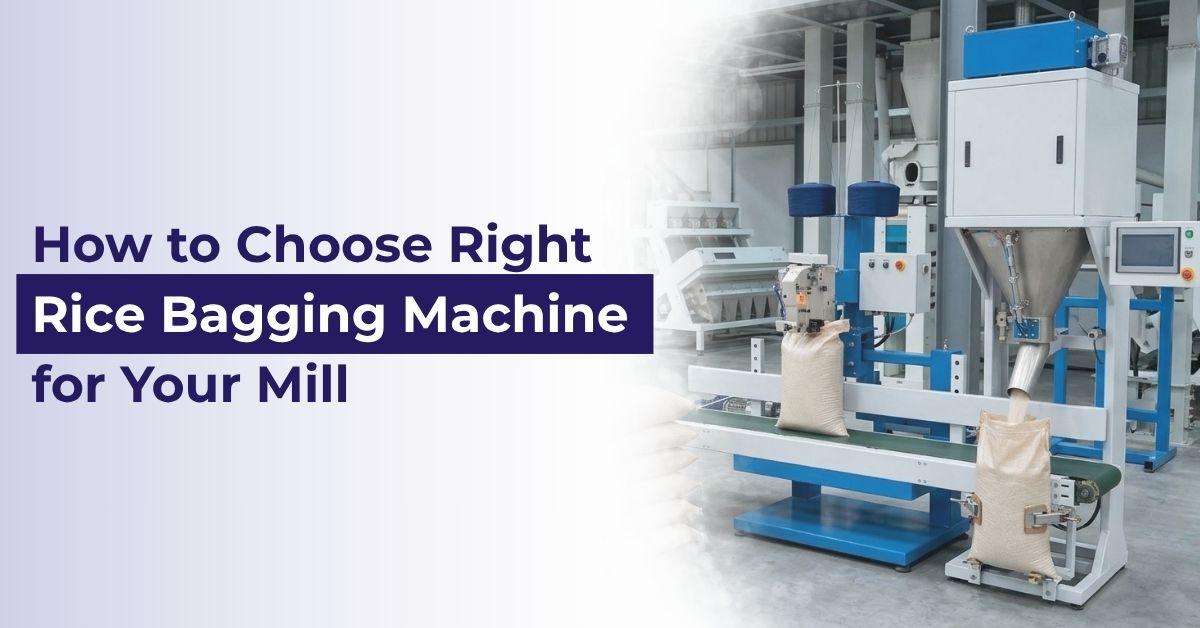
Every day, rice mills move mountains of grain, relying on manual labour because it’s affordable and readily available. But as mills expand and automation becomes more attainable, adopting new technology is key to staying ahead. Delays in dispatch, rising labour expenses, uneven bag weights, and surging order volumes are hurdles that mills face. The right rice bagging machine can boost throughput, cut down on product giveaway, and set the stage for future growth. Here’s a hands-on guide to help you find the perfect bagging machine for your packaging needs.
Why are Rice Mills Moving Towards Automation?
Rice cultivation and processing are inherently labour-intensive activities that require substantial manual intervention. Manual labour is prone to human error, is time-consuming, and often results in inconsistent outcomes.
Automated systems address the limitations associated with traditional manual techniques by increasing process speed, particularly in packaging, and promoting a seamless workflow with reduced human intervention.
How to Choose the Right Rice Bagging Machine?
To choose the right machine for your manufacturing and processing unit, you need to evaluate some key operational factors:
Identifying the Desired Bag Weight
This could vary from unit to unit, but manufacturers have specific weight categories that they pack their rice bags in. These categories usually include 1 kg, 2 kg, 5 kg, 10 kg, 25 kg and 50 kg bags. The right bag filling machine can come in several variants that each cater to a different weight range.
Choosing the Right Material
Rice bags often come wrapped in different materials. Some manufacturers choose the classic woven PP bag, which is durable, low-cost, and sewn shut to protect the rice from external damage. Others choose a three-layer composite bag: an outer PP woven layer, an inner PE film layer, and a middle composite adhesive layer. However, poor packaging material quality could significantly impact the speed and accuracy of the rice being bagged. Low-quality pouches can get stuck or cause sealing issues. And limp or static-prone thinner materials can wrinkle, fold, or fail to open completely, leading to under-filled or rejected weights.
Determining the Capacity
As demand increases and customer bases expand, manufacturers may encounter delays in dispatching goods. It is therefore essential to establish the required capacity by calculating the number of bags needed per hour.
A simple way to calculate this is: tonnes/hour × 1,000 ÷ kg/bag. For example, if you need to pack 5 tonnes of rice in 25KG bags per hour, your desired capacity would be 200 bags per hour
Evaluating the Weighing Accuracy
Automated bag filling machines provide significantly improved filling accuracy compared to manual packaging methods. Some solutions, such as the Prompt PackEasy range, offer manufacturers detailed accuracy specifications.
Determining the Scope of Automation
When establishing a new production line or upgrading an existing setup, it is essential to determine the desired level of automation. Some production lines implement automated bag filling but require manual intervention for bag placement. Others utilize fully automated systems, incorporating automatic weighing machines, bagging machines, sewing or sealing machines, checkweighers, metal detectors, and robotic palletizers.
Considering Package Sealing Method
Several methods are available for sealing filled rice bags. Common techniques include heat sealing and sewing, while some manufacturers may opt for vacuum sealing to preserve product freshness. Solutions such as Prompt PackEasy provide both thread sewing and heat sealing equipment as optional features.
Taking Future Expansions into Account
A manufacturer may want to choose a machine variant that suits their current packaging needs. However, operations may grow, and the chosen variant may not be able to stay on par with it. That’s why it is important to consider future expansion opportunities while purchasing a bag filling machine.
Advanced Packaging Solutions for Modern Manufacturing
A prominent roadblock in filling rice bags is the lack of a solution that makes the entire process efficient and precise. Manual labour may be a cheaper and easier alternative, but it is not sustainable in the long run. Manufacturers need solutions that can accommodate higher consumer demands and reduce product giveaway.
Prompt PackEasy automated bag filling system represents one such solution. A recent case study from Gujarat demonstrates its effectiveness.
A prominent rice mill based in Ahmedabad was following a traditional approach to packaging rice. This meant a labour-intensive, cumbersome process that often led to a lot of product wastage. The company also packed rice for multiple companies, which meant filling bags of different weights.
Prompt PackEasy was implemented as a precision-driven solution. The automated bag-filling system enabled efficient filling, weighing, and sealing of rice bags, reducing reliance on manual labour and minimizing product giveaway. The production target increased from 3,200 bags per day to 6,400 bags per day, effectively doubling productivity.
This smart automated bag-filling system features an intelligent auto mechanism with a servo motor. This enables fast, accurate, and consistent feeding control. The Prompt PackEasy also includes an auto filler specifically designed for industrial applications that demand high-speed accuracy. No matter the volume of grains, this machine offers easy operation, automated control, and accurate filling at every cycle.
For small and mid-sized companies in the agro-dairy industry, Prompt PackEasy offers a cost-effective solution for automating multiple processes previously performed manually.
For further information about the product, schedule a call today.
Frequently Asked Questions
Key factors include bag weight range, production capacity, weighing accuracy, level of automation, sealing method, and future expansion requirements.
Modern bagging machines use precise weighing systems to ensure each bag contains the intended quantity of rice.
Many modern rice bagging machines can accommodate multiple bag sizes, including 1 kg, 5 kg, 10 kg, 25 kg, and 50 kg bags. Machines like Prompt PackEasy have different variants for products ranging from 1KG to 100KG.
Upgrading from manual rice packaging to an automated system begins with evaluating your current production volume, target bag sizes, and packaging bottlenecks.
A complete rice packaging line typically includes an automatic weighing machine, rice bagging machine, bag sewing or heat-sealing machine, conveyor system, and bag handling equipment.
