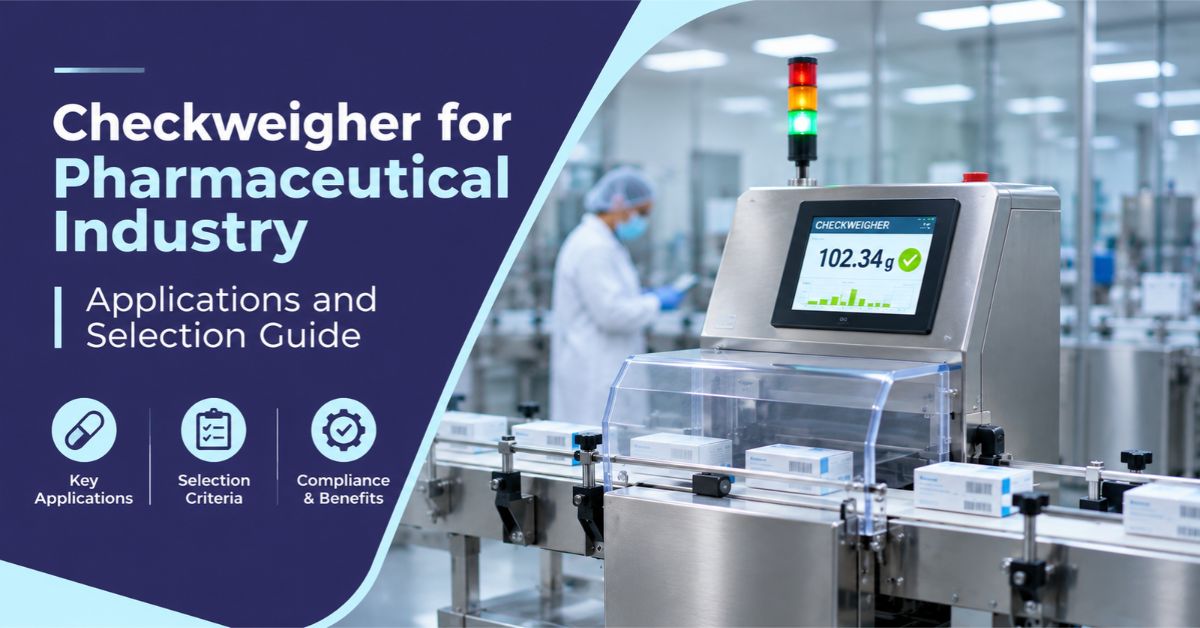
The manufacturing of pharmaceutical products is not as forgiving as manufacturing other products. There’s little room for weight inconsistencies, since they can significantly impact doses. Whether it is packing tablets into bottles or placing accurate quantities of medicine in blister packs, the stakes are always high and demand precise measurements each time. This is why it is crucial for pharmaceutical brands to adopt precision-driven weighing solutions, including checkweighers, for compliance-friendly operations.
Why Does Weighing Accuracy Matter During Inspection?
Pharmaceutical companies must comply with Good Manufacturing Practices (GMP) standards, which are a mandatory set of guidelines and quality assurance checks that ensure all products are consistent and meet set parameters. Weight accuracy is one of the most crucial aspects in this context, because minor discrepancies could trigger a chain reaction, leading to non-compliant batches and damaged reputation.
Normally, accurate weighing of products is necessary so manufacturers can avoid excess giveaway and ensure the profitability of their operations. In pharmaceutical companies, however, this moves to a new level, where manufacturers have to take into account audit readiness, dosages, and patient safety as well. That’s why precision-driven weighing solutions are important.
To address this, manufacturers place specialized checkweighers along their production line to closely monitor the products being packaged while keeping up with production speeds.
What Makes a Checkweigher Suitable for Pharmaceutical Manufacturing
Pharmaceutical operations require slightly more advanced checkweighing functionalities than other industries. They need precise weight measurements to help package the exact dosage of product every time. Consistency is the key, and the checkweigher needs to abide by that. To understand this better, here are some parameters that it needs to look after:
QC Process: Pharmaceutical manufacturing needs complete weight inspection assurance, where the weight of each product must be the same. Even minor weight discrepancies can compromise batch integrity, trigger investigations, and increase the risk of regulatory non-compliance. Thus, a good checkweigher could help the manufacturer adhere to these regulations.
Clean-room Compliance: Manufacturing of consumables in any form often calls for machines to be clean-room compliant. This means that the machine is designed specifically to minimize or prevent contamination, thus keeping the consumable safe. A checkweigher like the Prompt Online Checkweigher, made out of 304 stainless steel and constructed with hygiene and aseptic conditions in mind can help keep operations clean.
Human Intervention: Brands working mainly with human labour often run the risk of increased manual errors. A checkweigher that not only weighs and registers product weights but also sorts out products that aren’t compliant, without the need for a person to monitor, makes operations more efficient and saves the cost of labour.
Common Applications of Checkweighers in Pharmaceutical Manufacturing
Within the pharmaceutical industry, checkweighers fulfil a number of roles to become a critical part of the production line:
Dosage Verification: The checkweighers used are generally dynamic in nature and can measure the amount of liquid or number of tablets in bottles and blister packs to make sure they match the specifications.
Open-Flap & Seal Detection: Checkweighers can detect opened or damaged flaps and unsealed packages.
Post-packaging Weighing: The exact number of boxes in cases towards the end of the production line can also be verified with checkweighers.
Checking for Completeness: Specialized checkweighers can also detect missing components of a package, including missing leaflets, pills/capsules, and so on.
What Happens When You Don’t Have a Checkweigher For Your Pharma Operations?
Since checkweighers are crucial to the operations of a pharmaceutical company, their absence could cause some serious consequences.
Dosage Failures: A missed capsule or underfilled syrup in a bottle could snowball into serious safety concerns for the consumer.
Dependency on Manual Labour: The lack of an automated weighing solution means increased manual processes. It’s not always a problem, but it does leave more room for human errors. And when accuracy is paramount, even minor errors could lead to serious consequences.
Compliance Issues: Several checkweighers can detect missing products, open flaps, and defective items while the product packages move along downstream. Without this, there is a high chance of these faulty items making it to the final shipment, leading to compliance troubles, product recalls, and a lack of customer trust.
Key Factors to Consider While Purchasing a Checkweigher
By now, checkweighers are an established part of manufacturing operations. However, depending on the type of industry and goals of the manufacturer, there are certain factors that one needs to consider before investing in one.
Number of Products: If a pharmaceutical manufacturer chooses to produce single-product batches, the ideal checkweigher for them would be reliable and consistent in operation. However, if they choose multiple-product batches, their checkweighers would need to be versatile enough to handle various shapes and sizes.
Traceability and Industry 4.0-ready: Pharmaceutical manufacturers operate in highly regulated environments where maintaining production records is critical. In an age where they are increasingly drifting towards data-driven approaches to enhance their operations, a checkweigher capable of storing, analyzing, and exporting weight data can support audits, traceability initiatives, and continuous process improvement.
Scalability: Not many manufacturers take into account the possibility of scaling operations in the future. That’s why it is crucial for them to pick a checkweigher that grows with their production.
Speed of Production: Weighing solutions like Prompt Online Checkweighers are specifically designed to keep up with high-speed production. Depending on the weight of the product, it can monitor 30-50 pieces per minute. This is important if manufacturers wish to expand production capacity.
For manufacturers looking to make their pharmaceutical operations more efficient and accurate, the Prompt Online Checkweigher series has several versatile options that can accommodate their custom requirements.
FAQs
Checkweighers like the Prompt Online Checkweigher can help pharmaceutical manufacturers verify product weight, identify packaging defects, detect missing components, and ensure compliance with quality and regulatory requirements.
Yes. Certain checkweighers can detect weight variations caused by missing tablets, capsules, leaflets, or other package contents, allowing defective products to be removed before shipment.
Yes. By identifying defective or incomplete packages before shipment, checkweighers help reduce quality issues that could otherwise lead to costly recalls.
Inaccurate product weights can result in dosage inconsistencies, compliance violations, product recalls, customer complaints, and potential risks to patient safety.
The right checkweigher depends on factors such as product type, inspection accuracy, throughput requirements, clean-room compatibility, and future production expansion plans.
